

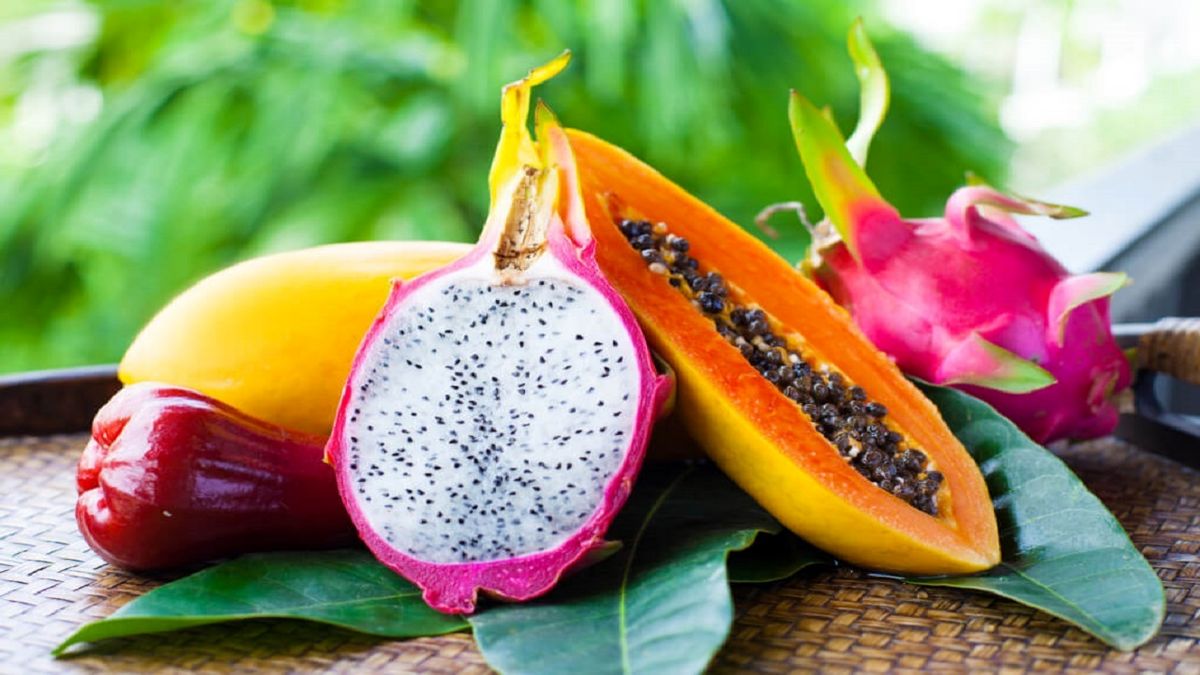
The production of tropical fruits and its supply to the world markets is one of the many fields of employment for the producing countries, which also brings significant foreign exchange income to the governments. Currently, countries producing tropical fruits play an important role in meeting the needs of other countries in all seasons for these products, both in terms of volume and variety.
The main tropical fruits include banana, pineapple, avocado, mango and papaya. Some of these fruits, such as bananas and pineapples, have been the target of export and import for a long time, and gradually due to the increase in production volume and the facilitation of its international transportation, its cost price has also increased, especially in the conditions of competition in the global and national markets, compared to alternative products. There has been a relative decrease.
This made the aforementioned fruits more accessible to the population of the so-called developed countries of Europe and North America in the 1970s and 1980s in terms of economics and availability. But at that time, the majority of the citizens of the Soviet Union were not able to buy these products. The reason for this was the government’s policy to achieve its maximum need for agricultural products and food, including fruits and vegetables, at the cost of its own production.
In addition, at that time, the Soviet Union included the republics of Central Asia, the Caucasus, Ukraine, Moldova, etc., which sometimes had more favorable conditions than Russia for growing tropical crops.
Nevertheless, some fruits and agricultural products were procured from other countries in small quantities; But for the most part, from an economic and supply point of view, it was available only to a small part of the people of the Soviet Union who lived in the metropolises and large cities and had an income above the average level. In general, between 1960 and 1990, tropical (bananas and pineapples) and subtropical (oranges, lemons, tangerines) fruits were exported to the Soviet Union; But the share of tropical products in the consumption basket of the citizens of this country was insignificant.
The collapse of the Soviet Union led to the disappearance of the communist atmosphere governing its economy and the formation of a new arena in many economic relations, including the import of fruits and vegetables. Trade structures that emerged in the early 1990s led to increased imports and purchases of tropical products from non-CIS (Commonwealth of Independent States) countries. However, tropical fruits (except bananas) were still considered a luxury item for the average Russian consumer.
The continuous economic growth in Russia and the increase in the per capita income of the country’s people in the first decade of the 21st century led to an increase in demand, followed by an increase in the import of all kinds of fruits. As a result of these factors and due to the lack of different capacities to produce various types of fruit and fresh products, including cold weather, Russia became one of the main fruit importing countries in the world.
In 2011, Russia ranked first in the world in terms of the volume of imports of fruits such as apples, tangerines, oranges, pears, cherries, plums, apricots and plums. It was also ranked second in the import of products such as grapes, peaches and nectarines, lemons and limes, dried apricots, peeled walnuts, and ranked third in the world import of products such as bananas.
Due to the increase in the purchasing power of Russian citizens, in addition to bananas, the demand for other main tropical fruits, including pineapple, avocado, mango and papaya, increased, and as a result, imports also grew significantly.
Regarding the import of this type of products to Russia, the existence of one to three countries producing tropical fruits is seen, which is important in this sense, and each of the imported products and sources will be discussed in the following.
The statistics of the years 1992-2019 have shown the increase in the volume of global production and international trade of tropical fruits and have expressed the role of Russia as one of the main importers of said products. In the following, the changes in the development of the global market of tropical fruits from 1992 to 2019 and the increase in its import by Russia are analyzed.